

Testosterone Booster Market Size to Hit US$568.0 Mn by 2033 | Persistence Market Research
testosterone booster market
Testosterone booster market driven by fitness trends, aging male population, and rising demand for natural supplements supporting hormonal balance and vitality.
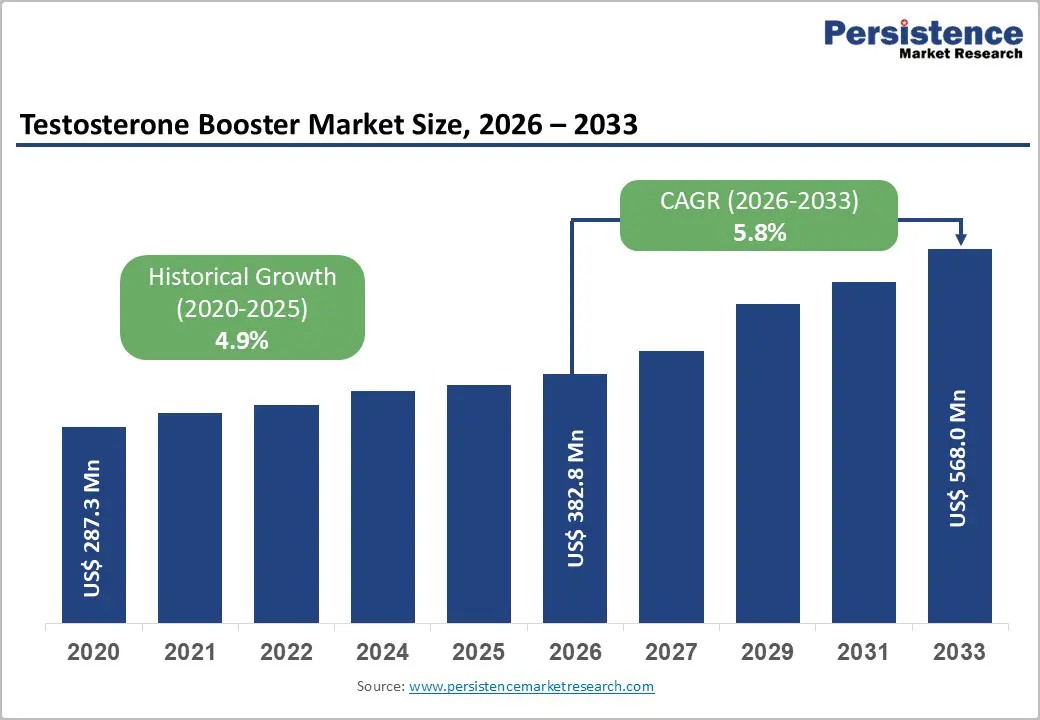
LONDON, UNITED KINGDOM, March 9, 2026 /EINPresswire.com/ -- The global testosterone booster market is experiencing steady growth due to increasing awareness about men’s health, fitness, and hormonal balance. The market is expected to reach US$ 382.8 million in 2026 and is projected to grow to US$ 568.0 million by 2033, registering a CAGR of 5.8% from 2026 to 2033. Testosterone is an essential male sex hormone produced mainly in the testes and is responsible for male development, muscle growth, bone density, and sexual health. During puberty, it contributes to the development of masculine characteristics such as facial hair, deeper voice, and increased muscle strength. Testosterone boosters include supplements and pharmaceutical products designed to increase testosterone levels in the body.
Download Your Free Sample & Explore Key Insights: https://www.persistencemarketresearch.com/samples/34824
Market Drivers
Growing awareness of men’s health is one of the major factors driving the testosterone booster market. Many men experience symptoms associated with low testosterone levels, including fatigue, decreased libido, reduced muscle mass, and lower energy levels. As knowledge about these symptoms increases, consumers are more willing to seek supplements that can help improve hormonal balance and overall well-being. Marketing campaigns by supplement brands and the influence of fitness professionals on social media have also contributed to the growing popularity of testosterone boosters. Another key driver is the rapid expansion of the global fitness and bodybuilding industry. Testosterone plays a vital role in muscle development, strength, and athletic performance. As a result, fitness enthusiasts and athletes frequently use testosterone boosters to improve workout performance and speed up recovery. The rising number of gyms, sports clubs, and online fitness programs has further accelerated the demand for these supplements.
Aging Population Influence
The growing aging male population is another important factor contributing to market expansion. Testosterone levels naturally decline after the age of 30, which can result in symptoms such as reduced energy, muscle loss, and decreased sexual performance. Many middle-aged and older men turn to testosterone boosters to maintain vitality and support healthy aging. Healthcare professionals often recommend supplements as part of lifestyle management strategies aimed at improving physical performance and hormonal health. With the global population aging rapidly, the demand for products that support male vitality and hormonal balance is expected to increase in the coming years.
Market Restraints
Despite strong growth potential, the testosterone booster market faces certain limitations. Concerns related to the safety and effectiveness of some supplements remain a major challenge. Many testosterone booster products contain herbal ingredients that may not have sufficient clinical evidence supporting their claims. This lack of scientific validation can lead to skepticism among consumers. In addition, improper use of some supplements may cause side effects such as hormonal imbalance, cardiovascular complications, or liver issues. Regulatory authorities in several countries closely monitor product claims and safety standards, which may result in stricter regulations for manufacturers. These factors can restrict market growth and require companies to invest more in research and transparent product labeling.
Get Custom Insights Designed for Your Business: https://www.persistencemarketresearch.com/request-customization/34824
Opportunities in Natural and Personalized Supplements
The growing demand for natural and plant-based supplements presents significant opportunities in the testosterone booster market. Consumers increasingly prefer products made with herbal ingredients and free from synthetic chemicals. Natural components such as ashwagandha, fenugreek, and ginseng are gaining popularity because of their association with improved stamina, stress reduction, and hormonal balance. Another emerging trend is personalized nutrition. Advances in health technology now allow companies to create customized supplement solutions based on individual hormone levels, genetics, and lifestyle factors. Personalized supplementation improves product effectiveness and builds greater consumer trust, opening new growth opportunities for market players.
Segment Analysis
Based on ingredients, the testosterone booster market includes D-aspartic acid, vitamins, zinc, and magnesium. Among these, vitamin-based formulations hold a large share because vitamins, particularly vitamin D, are associated with hormone regulation and overall male health. From a source perspective, the market includes ingredients such as oyster extract, fenugreek, ginseng, and ashwagandha. Fenugreek is one of the most commonly used ingredients due to its availability, affordability, and traditional reputation for supporting strength and hormonal balance.
Regional Insights
North America currently holds a significant share of the global testosterone booster market due to high health awareness, strong purchasing power, and widespread use of dietary supplements. Europe represents a stable market where consumers prefer natural and scientifically supported ingredients. The Asia Pacific region is expected to witness the fastest growth due to rising disposable incomes, increasing urbanization, and expanding fitness culture in countries such as India, China, and Japan. The growing popularity of herbal supplements and expanding e-commerce platforms are also supporting market growth in the region.
Checkout Now & Download Complete Market Report: https://www.persistencemarketresearch.com/checkout/34824
Competitive Landscape
The testosterone booster market is highly competitive and includes both established global brands and emerging supplement companies. Market participants focus on product innovation, high-quality ingredients, and strong branding strategies to attract consumers. The growth of e-commerce platforms and direct-to-consumer sales channels has intensified competition by providing customers with a wide range of supplement options. Despite competition from alternative treatments such as hormone replacement therapy and prescription medications, increasing consumer preference for natural health supplements is expected to sustain long-term growth in the testosterone booster market.
Global Testosterone Booster Market Segmentation
By Ingredient
D-Aspartic Acid
Vitamins
Zinc
Magnesium
By Dosage
Capsule
Tablet
Softgel
By Source
Oyster Extract
Fenugreek
Ginseng
Ashwagandha
By Distribution Channel
Pharmacies
Hypermarket and Supermarket
Online Sales Channel
Others
By Region
North America
Europe
East Asia
South Asia and Oceania
Latin America
Middle East and Africa
Read Related Reports:
In Vitro Protein Expression Market: The in vitro protein expression market grows from US$274.2 Mn in 2026 to US$418.5 Mn by 2033, registering a CAGR of 6.2% during the forecast period (2026–2033).
Cardiovascular Information Systems Market: The cardiovascular information systems market grows from US$1.5 Bn in 2026 to US$2.8 Bn by 2033, expanding at a CAGR of 9.1% during the forecast period (2026–2033).
Persistence Market Research
Persistence Market Research Pvt Ltd
+1 646-878-6329
email us here
Visit us on social media:
LinkedIn
Instagram
Facebook
YouTube
X
Legal Disclaimer:
EIN Presswire provides this news content "as is" without warranty of any kind. We do not accept any responsibility or liability for the accuracy, content, images, videos, licenses, completeness, legality, or reliability of the information contained in this article. If you have any complaints or copyright issues related to this article, kindly contact the author above.
