

New Research Reveals $6–9 Billion Worth of Toys Are Returned Every Year in the U.S. — Most End Up in Landfill
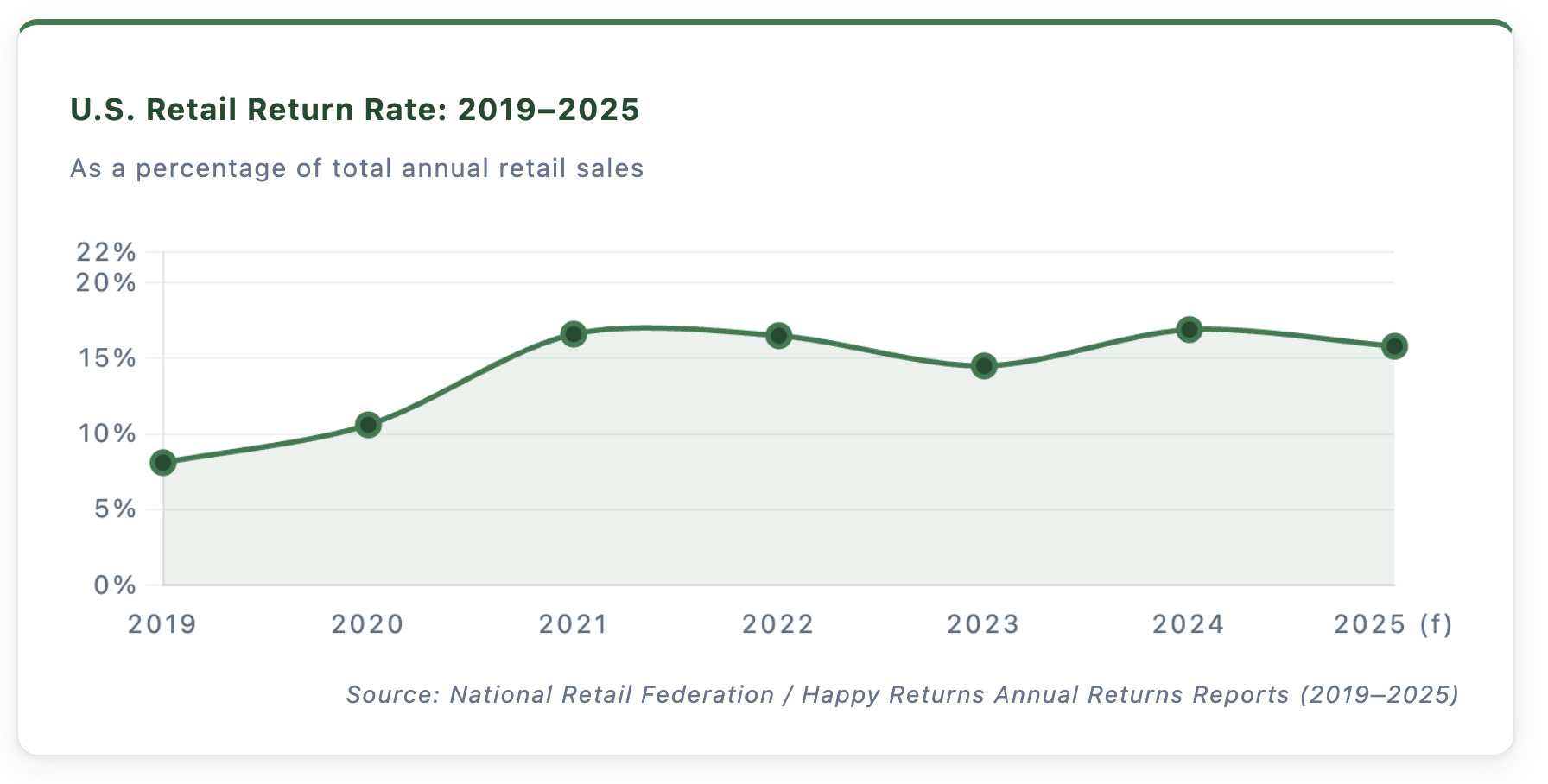
U.S. Retail Return Rate By Year
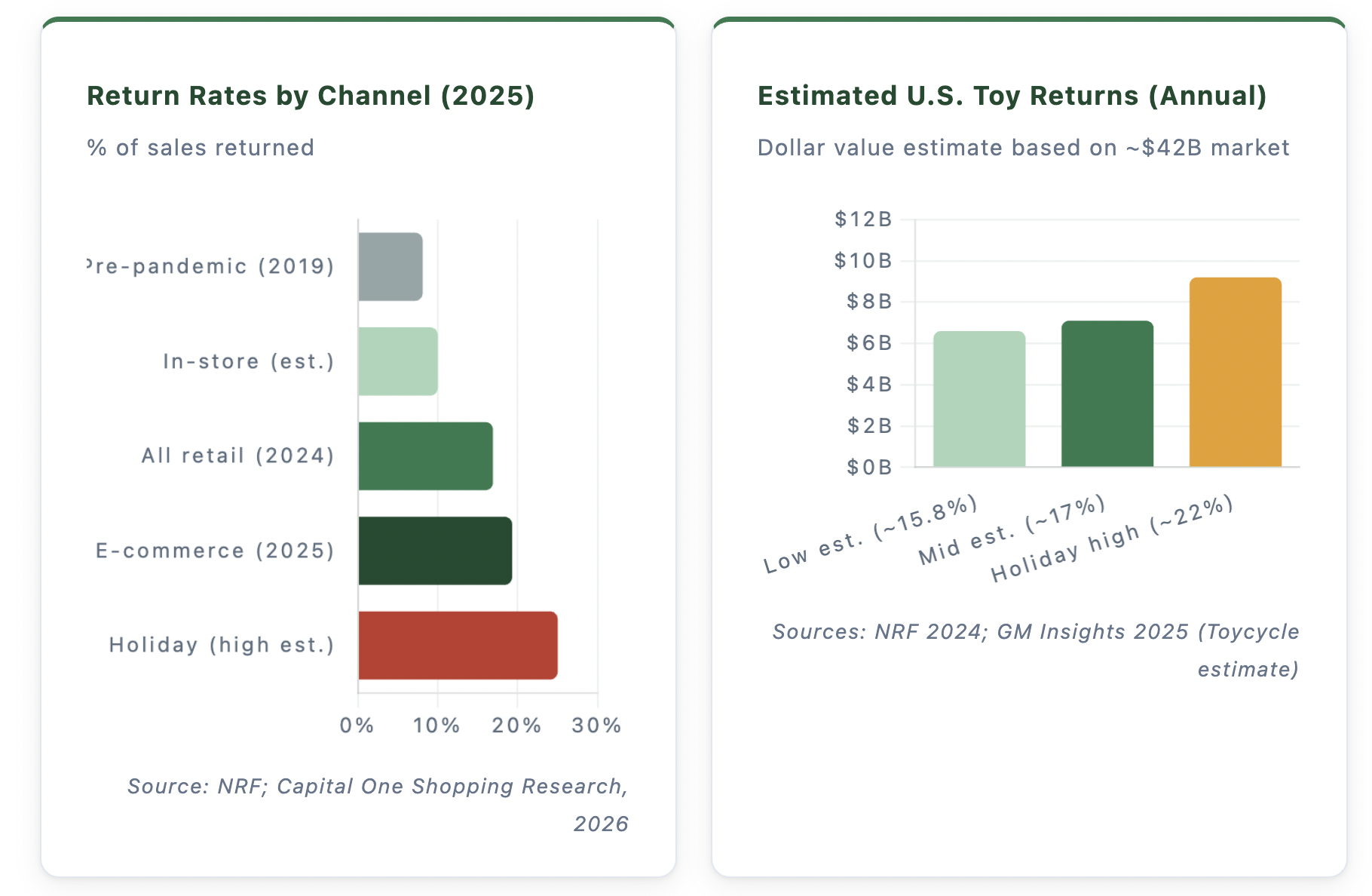
Return Rates By Channel
Toycycle's State of Toy Returns 2026 report exposes the scale, environmental cost, and missed recovery opportunity in the global toy industry
The toy industry has treated returns as a cost problem for decades. The data tells a different story: for premium, sustainably made toys, returns are a largely untapped value opportunity.”
HAYWARD, CA, UNITED STATES, March 19, 2026 /EINPresswire.com/ -- Toycycle, a Resale-as-a-Service platform for sustainable toy brands, today published The State of Toy Returns 2026: Data, Recovery Rates & Waste Impact — the most comprehensive publicly available analysis of toy return rates, reverse logistics pathways, and environmental consequences in the toy industry.— Sarfraz Arshad, Chief Strategy Officer at Toycycle
The report, drawing on 27 cited sources including the National Retail Federation, MDPI Sustainability, Optoro, and the Toy Association, finds that the toy industry's returns problem is significantly larger — and more environmentally damaging — than previously understood.
Key Findings
The scale is significant. Applied to the $42 billion U.S. toy market and a 2024 retail return rate of 16.9%, Toycycle estimates that between $6 billion and $9 billion worth of toys are returned annually in the U.S. alone. During the holiday season, return rates for retail merchandise reach 20–25%, making toys one of the highest-volume return categories.
Most returned toys are not resold. Approximately 80% of all toys — including returns, end-of-life products, and discarded toys — end up in landfills, incinerators, or the ocean (The World Counts; Ballard Bear). An estimated 8.5 million toys enter U.S. landfills every year (Second Chance Toys).
The carbon cost is material. U.S. retail returns across all categories generate an estimated 24 million metric tons of CO₂ annually — comparable to the emissions of U.S. domestic aviation (Optoro). Processing a return costs retailers up to 30% of the item's original price, with transportation as the primary driver.
Toys are the most plastic-intensive consumer product on earth. The toy industry consumes an estimated 40 tons of plastic for every $1 million in revenue — the highest plastic intensity of any consumer goods sector (The World Counts; Yale Environment Review). Approximately 90% of new toys contain some form of plastic, and plastic toy components can persist in the environment for up to 500 years.
Sustainable toy brands recover dramatically more value. Toycycle's operational data shows that premium sustainable toy brands — including PlanToys, Loog Guitars, Way2Play, and Janod — recover 55–66% of original retail price through resale. Mass-market liquidation, by contrast, recovers just 10% of retail value.
The secondhand toy market is growing faster than new toy sales. The toy collectibles secondhand market was valued at $19.2 billion in 2024 and is projected to reach $45.2 billion by 2032, at a compound annual growth rate of 10.6% (Verified Market Research). The global secondhand products market is projected to exceed $1 trillion by 2035.
"The toy industry has been treating returns as a cost problem for decades, says Sarfraz Arshad, Toycycle's Chief Strategy Officer. The data tells a different story: for premium, sustainably made toys, returns are a significant and largely untapped value opportunity. A toy that costs $4 to destroy recovers $18–$40 in revenue when it is properly graded and resold. The infrastructure to do that at scale doesn't yet exist for most brands — but the market demand clearly does."
Why This Matters Now
Regulatory pressure is increasing. The EU's Ecodesign for Sustainable Products Regulation (ESPR) is expanding to cover toys, and Extended Producer Responsibility (EPR) legislation is advancing across multiple U.S. states. Brands without a credible reverse logistics and resale strategy face both regulatory exposure and reputational risk as consumer awareness of product waste grows.
At the same time, platforms capable of turning returns into resale inventory are growing faster than new toy sales — creating a structural opportunity for brands that act now.
About the Report
The State of Toy Returns 2026: Data, Recovery Rates & Waste Impact is a 4,200-word research report compiling publicly available data from industry associations, peer-reviewed journals, market research firms, and non-profit organizations. It includes nine data charts, four original datasets, and 27 cited sources. The full report is available at:
https://toycycle.co/pages/the-state-of-toy-returns-2026
About Toycycle
Toycycle is a Resale-as-a-Service (RaaS) platform that manages the full returns and resale lifecycle for sustainable toy brands — including inspection, grading, refurbishment, photography, listing, fulfilment, and reporting. Toycycle's brand partners include PlanToys, Loog Guitars, Way2Play, Janod, and PJM Distributions. Toycycle turns returned and overstocked inventory into a resale revenue stream, recovering 55–66% of original retail value for premium toy brands.
Website: www.toycycle.co – Brands portal: brands.toycycle.co
For a copy of the full report, supporting data, or to arrange an interview, please contact partnerships@toycycle.co, press@toycycle.co
Rhonda Collins
Toycycle
partnerships@toycycle.co
Visit us on social media:
LinkedIn
Instagram
Facebook
Legal Disclaimer:
EIN Presswire provides this news content "as is" without warranty of any kind. We do not accept any responsibility or liability for the accuracy, content, images, videos, licenses, completeness, legality, or reliability of the information contained in this article. If you have any complaints or copyright issues related to this article, kindly contact the author above.
