

Automotive Interior Leather Market to Reach US$ 43.1 Bn by 2032, Growing at a 4.1% CAGR | Persistence Market Research
Automotive Interior Leather Market
Rising demand for premium vehicle interiors and sustainable materials is driving steady growth in automotive interior leather solutions globally.
BRENDFORD, LONDON, UNITED KINGDOM, April 29, 2026 /EINPresswire.com/ -- The automotive interior leather market is evolving rapidly as automakers increasingly focus on enhancing vehicle aesthetics, comfort, and luxury appeal. Interior leather materials are widely used in seats, dashboards, steering wheels, and door panels, offering durability, premium feel, and improved driving experience. Growing consumer preference for high-end vehicles and rising disposable incomes are encouraging manufacturers to incorporate advanced leather interiors even in mid-range models.
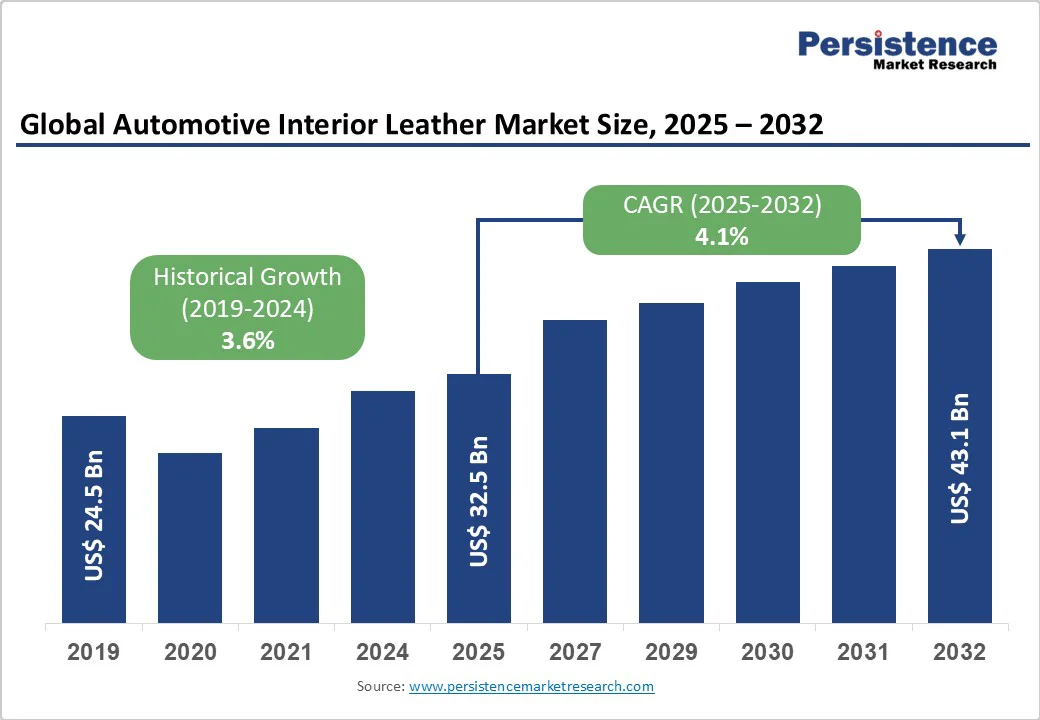
According to Persistence Market Research, the global automotive interior leather market size was valued at US$32.5 billion in 2025 and is projected to reach US$43.1 billion by 2032, growing at a CAGR of 4.1% during the forecast period 2025 - 2032. Key growth drivers include increasing production of passenger vehicles, rising demand for luxury automotive interiors, and the expanding electric vehicle segment. Among segments, genuine leather continues to dominate due to its premium appeal and durability. Asia Pacific leads the global market, driven by high automotive production, growing middle-class population, and increasing demand for premium vehicles across emerging economies.
Get Free Sample Now: https://www.persistencemarketresearch.com/samples/35754
Key Highlights from the Report
➤ The global automotive interior leather market is valued at US$32.5 billion in 2025 and is projected to reach US$43.1 billion by 2032, expanding at a CAGR of 4.1%.
➤ Rising demand for premium and luxury vehicles is significantly boosting the adoption of high-quality automotive interior leather materials.
➤ Increasing focus on passenger comfort and enhanced in-vehicle experience is driving innovation in leather design and finishing technologies.
➤ Growing production of electric vehicles is creating new opportunities for lightweight and sustainable interior leather solutions
➤ Asia Pacific remains the leading regional market due to strong automotive manufacturing and rising consumer purchasing power.
➤ Advancements in eco-friendly leather processing and synthetic alternatives are reshaping the competitive landscape of the market.
Market Segmentation
By Product Type
• Synthetic Leather
• PVC
• PU
• Silicone
• Natural Leather
• Vegan Leather
• Microfiber Leather
By Application
• Seats & Seat Covers
• Headliners & Trims
• Instrument Panel
• Center Console
• Door Trims & Panels
• Steering Wheel
• Others
By Vehicle Type
• Passenger Car
• Light & Medium Commercial Vehicle
• Heavy Commercial Vehicle
• Electric Vehicle
By Region
• North America
• Europe
• East Asia
• South Asia and Oceania
• Latin America
• Middle East and Africa
Request For Customization: https://www.persistencemarketresearch.com/request-customization/35754
Regional Insights
North America
North America represents a significant market for automotive interior leather, driven by strong demand for luxury vehicles and high consumer spending on premium automotive features. Automakers in the region focus on offering advanced interior designs with high-quality leather materials to enhance customer experience. The presence of leading automotive manufacturers and increasing adoption of electric vehicles further supports market growth. Additionally, consumers in this region prioritize comfort and customization, which encourages the use of premium interior materials.
Europe
Europe is a mature market characterized by the presence of leading luxury car manufacturers and a strong focus on innovation in automotive interiors. The demand for high-quality leather materials is driven by premium vehicle production and stringent quality standards. Sustainability is a key trend in the European market, with manufacturers investing in eco-friendly leather processing technologies. The region also emphasizes lightweight materials to improve fuel efficiency and reduce emissions, further influencing the adoption of advanced interior leather solutions.
Asia Pacific
Asia Pacific dominates the automotive interior leather market due to rapid industrialization, growing automotive production, and increasing disposable incomes. Countries in the region are witnessing strong demand for both mid-range and luxury vehicles, driving the adoption of leather interiors. Government initiatives supporting automotive manufacturing and infrastructure development are also contributing to market expansion. The presence of a large consumer base and expanding middle class makes Asia Pacific a key growth region for automotive interior leather manufacturers.
Market Drivers
The automotive interior leather market is primarily driven by rising demand for luxury and premium vehicles. Consumers are increasingly seeking enhanced comfort, aesthetics, and durability in vehicle interiors, which is encouraging automakers to integrate high-quality leather materials. The shift toward personalization and customization in vehicles is further boosting the demand for premium interior solutions. Automakers are focusing on offering differentiated interior designs to attract customers, thereby increasing the adoption of leather materials across various vehicle segments.
Another significant driver is the growth of the global automotive industry, particularly in emerging economies. Rapid urbanization and rising disposable incomes are leading to increased vehicle ownership, which directly contributes to the demand for automotive interior leather. Additionally, advancements in leather processing technologies are improving the quality, durability, and sustainability of leather materials.
Market Opportunities
The automotive interior leather market presents significant opportunities with the growing adoption of electric vehicles. EV manufacturers are focusing on lightweight and sustainable materials to improve efficiency and reduce environmental impact. This trend is driving the development of innovative leather alternatives that offer both sustainability and performance. Companies investing in eco-friendly leather solutions are likely to gain a competitive edge in the evolving automotive landscape.
Another key opportunity lies in technological advancements in leather processing and design. Innovations such as bio-based leather, recycled materials, and advanced finishing techniques are opening new avenues for market growth. The increasing demand for customized vehicle interiors also provides opportunities for manufacturers to offer unique and premium leather solutions.
The key players studied in the report include:
• Lear Corporation
• Asahi Kasei Corporation
• Toyota Boshoku Corporation
• Forvia
• GST AutoLeather
• Boxmark Leather GmbH & Co. KG
• Continental AG
• Kuraray Co. Ltd
• Scottish Leather Group
• Adient
• Alcantara
• Faurecia
Buy Now: https://www.persistencemarketresearch.com/checkout/35754
Future Opportunities and Growth Prospects
The automotive interior leather market is expected to experience steady growth as automakers continue to focus on enhancing vehicle interiors and customer experience. Rising demand for luxury vehicles, increasing adoption of electric vehicles, and advancements in sustainable materials will drive market expansion. Manufacturers investing in innovation, eco-friendly solutions, and advanced design technologies are likely to capitalize on emerging opportunities and strengthen their position in the global market.
Persistence Market Research
Persistence Market Research Pvt Ltd
+1 646-878-6329
email us here
Visit us on social media:
LinkedIn
Instagram
Facebook
YouTube
X
Legal Disclaimer:
EIN Presswire provides this news content "as is" without warranty of any kind. We do not accept any responsibility or liability for the accuracy, content, images, videos, licenses, completeness, legality, or reliability of the information contained in this article. If you have any complaints or copyright issues related to this article, kindly contact the author above.
